Dive into Georgia's legendary cuisine. From cheese-filled khachapuri to juicy khinkali dumplings, discover the dishes that make Georgian food world-famous.
Table of Contents
- 1Georgian cuisine is one of the world's great undiscovered cu...
- 2Khachapuri is undoubtedly Georgia's most famous culinary exp...
- 3Khinkali, Georgian soup dumplings, are an art form that requ...
- 4The supra is much more than a meal — it is a ceremonial feas...
- 5Beyond khachapuri and khinkali, Georgian cuisine offers an i...
- 6Georgian desserts deserve special mention. Churchkhela, made...
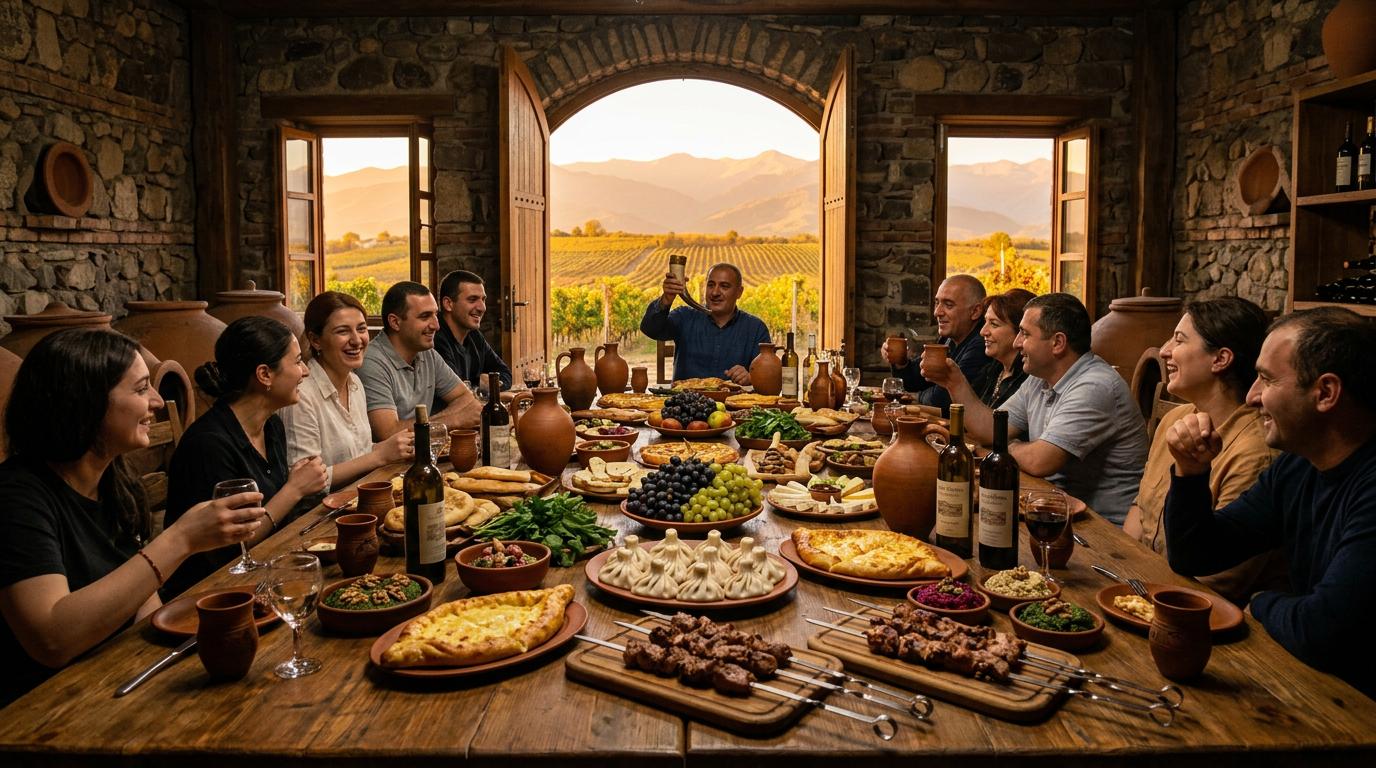
Georgian cuisine is one of the world's great undiscovered culinary treasures, a rich tradition shaped by the Silk Road, regional geography, and a deep reverence for hospitality. At the heart of Georgian food culture lies the supra — a traditional feast that can last for hours, featuring dozens of dishes, endless toasts led by a tamada (toastmaster), and an atmosphere of warm celebration. Understanding Georgian food means understanding the role it plays in bringing people together.
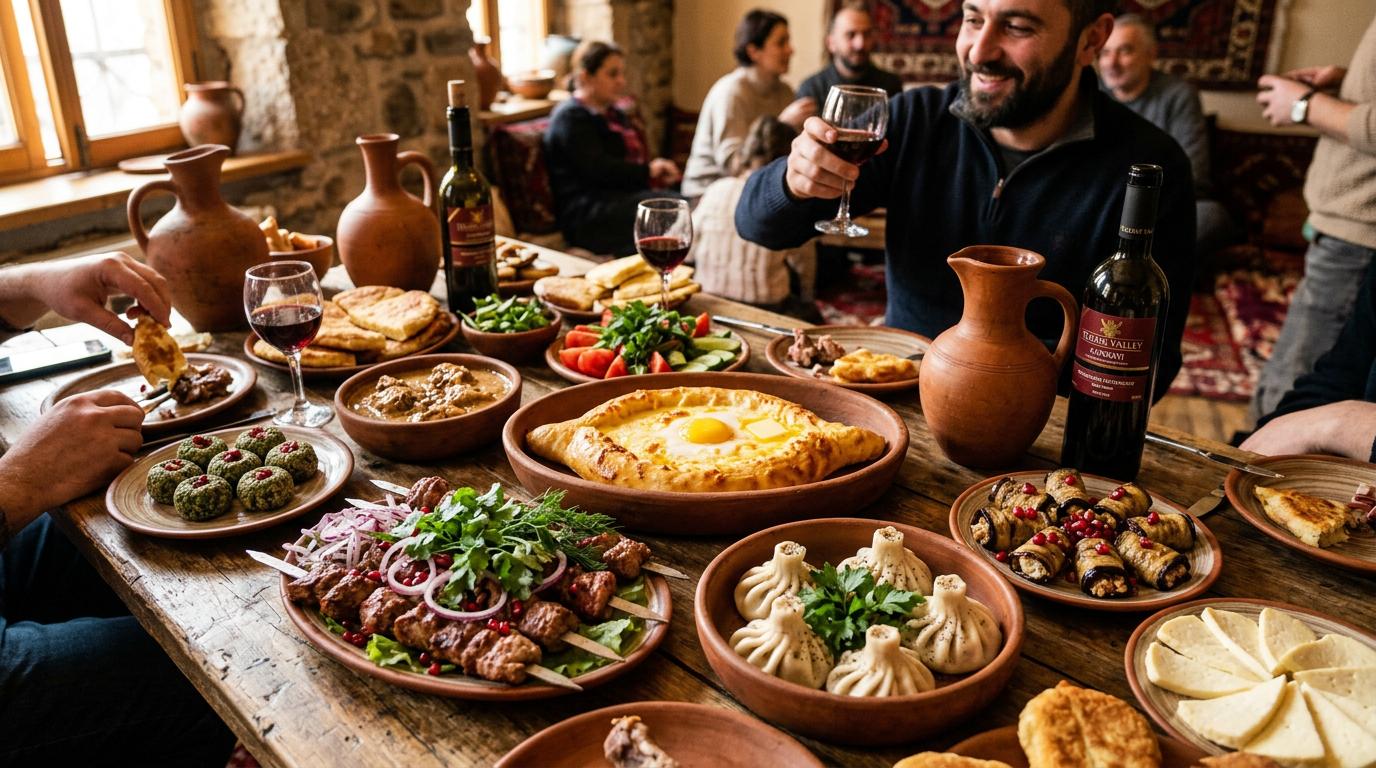
Khachapuri is undoubtedly Georgia's most famous culinary export, and it comes in several distinct regional varieties that reflect the diversity of the country. The Adjarian khachapuri, shaped like a boat and topped with cheese, butter, and a raw egg yolk, is perhaps the most visually striking version. The Imeretian khachapuri is a round cheese bread where the cheese is sealed inside the dough, creating a perfect balance of crispy crust and gooey interior. Megrelian khachapuri is similar but with extra cheese on top, while the Rachan version features both cheese and ham inside. Each region has its own take, and tasting your way through the varieties is a delicious journey.
Khinkali, Georgian soup dumplings, are an art form that requires practice to eat properly. These large, pleated dumplings are filled with seasoned meat (usually pork and beef) and broth. The proper technique is to pick up the dumpling by its topknot, take a small bite to slurp out the hot broth, then eat the rest while leaving the doughy knot on the plate as evidence of how many you have consumed. Eating the topknot is considered acceptable only for children. A typical serving includes ten to twelve dumplings, which constitutes a full meal.
The supra is much more than a meal — it is a ceremonial feast that represents the pinnacle of Georgian hospitality. A tamada, or toastmaster, leads the proceedings with eloquent toasts to peace, family, ancestors, fallen soldiers, women, children, and love. Between toasts, dozens of dishes are passed around the table. The supra can last anywhere from three to eight hours, and wine flows freely throughout. Participating in a traditional supra is an essential cultural experience for any visitor to Georgia.
Beyond khachapuri and khinkali, Georgian cuisine offers an incredible diversity of dishes. Badrijani nigvzit features thin slices of fried eggplant rolled around walnut-garlic paste and topped with pomegranate seeds. Phkali is a colorful vegetable pate made from spinach, beetroot, or beans mixed with walnuts and spices. Mtsvadi is Georgian barbecue, chunks of marinated meat grilled over vine cuttings for a distinctive smoky flavor. Chakapuli is a spring lamb stew with tarragon and green onions, while satsivi features turkey or chicken in a rich, cold walnut sauce traditionally served at New Year.
Georgian desserts deserve special mention. Churchkhela, made by threading walnuts on a string and dipping them in thickened grape juice before drying, is known as Georgian Snickers but is far healthier. Gozinaki is a honey and walnut brittle traditionally prepared for New Year. For the adventurous, try pelamushi, a sweet grape pudding. And no meal is complete without a glass of Georgian wine, the natural companion to this extraordinary cuisine. With its combination of bold flavors, fresh ingredients, and centuries of tradition, Georgian food is an experience that will stay with you long after you leave the table.