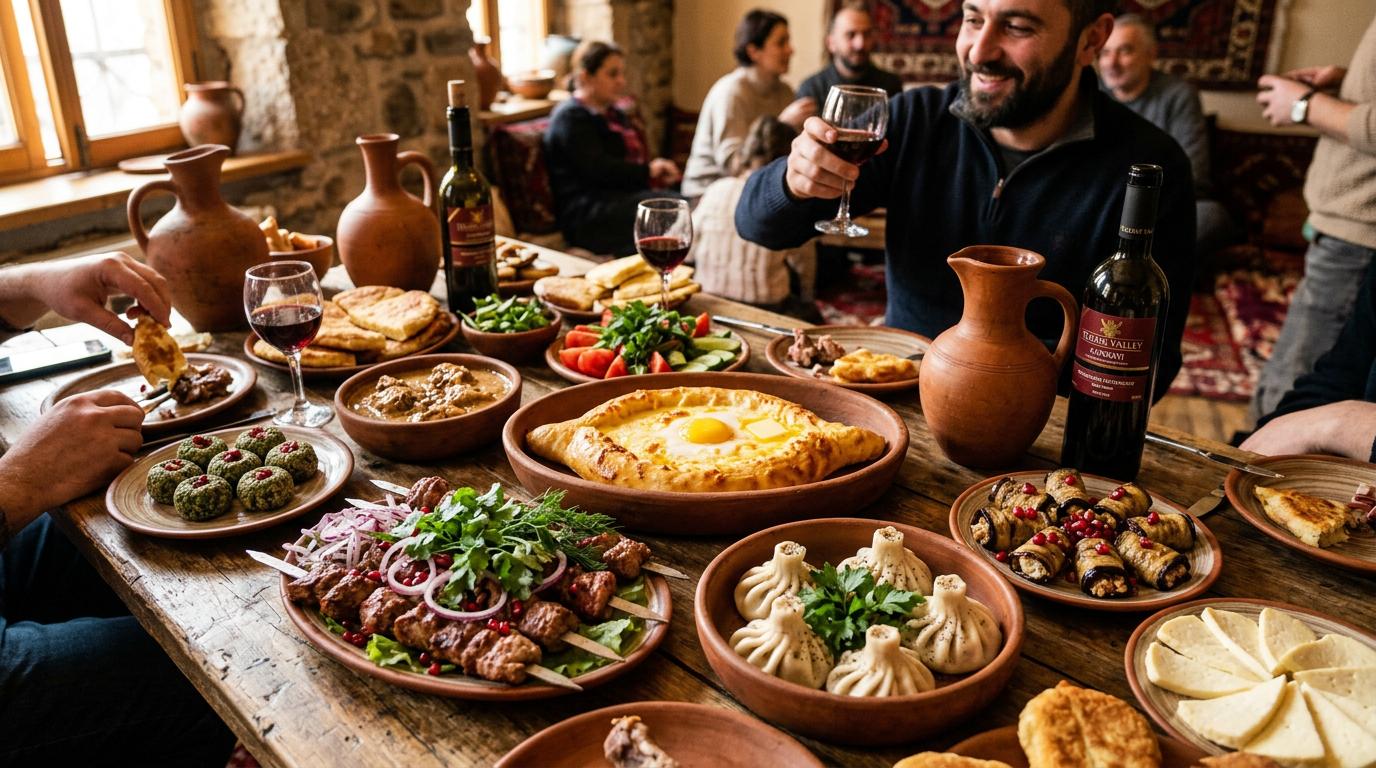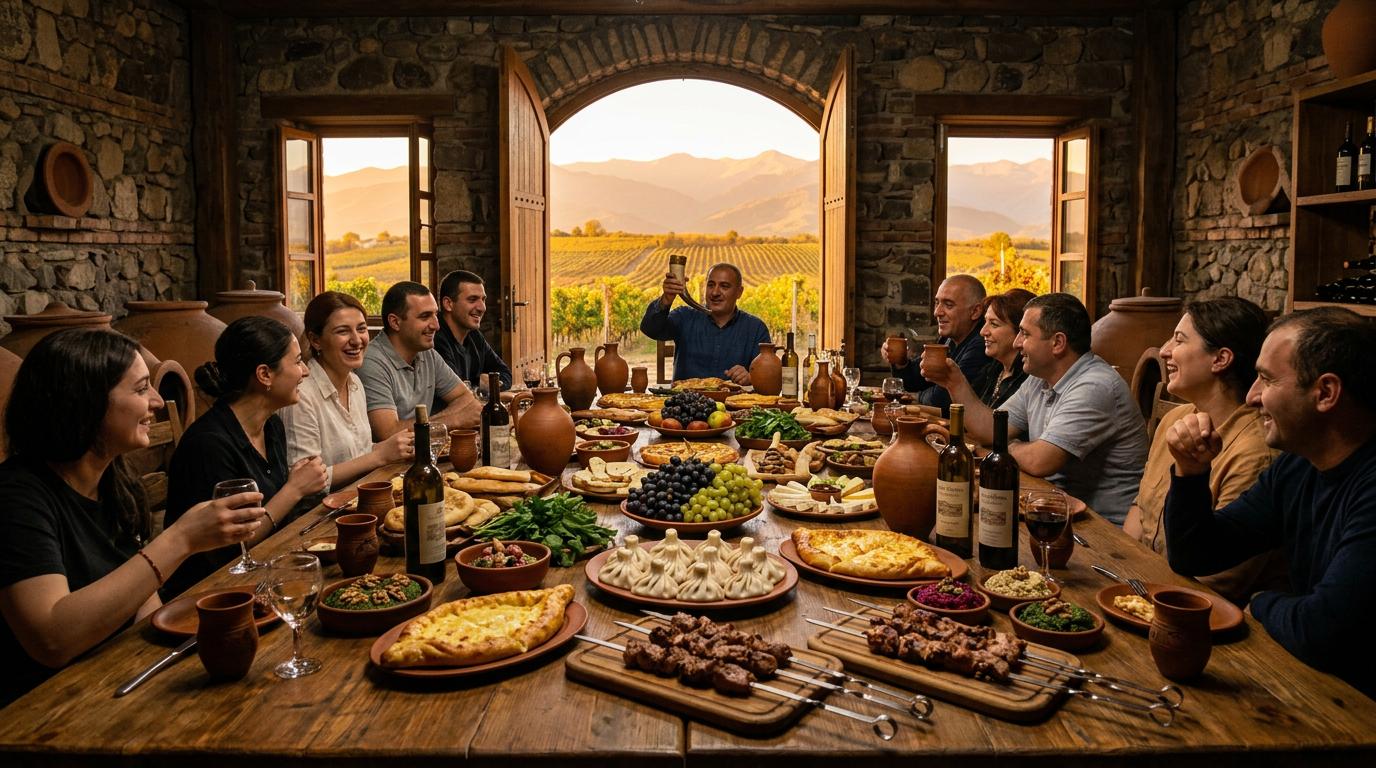
Journey through Georgia's legendary wine regions. Discover 8,000 years of winemaking tradition across Kakheti, Imereti, and Racha-Lechkhumi.
Table of Contents
- 1Georgia is universally recognized as the birthplace of wine,...
- 2Kakheti is Georgia's largest and most important wine region,...
- 3In Kakheti, the qvevri winemaking tradition reaches its full...
- 4Imereti, in western Georgia, offers a completely different w...
- 5Racha-Lechkhumi, a remote mountainous region in northwestern...
- 6The best time to visit Georgia's wine regions is during the ...
Georgia is universally recognized as the birthplace of wine, with archaeological evidence of winemaking dating back over 8,000 years. The country's unique qvevri method — fermenting wine in large clay vessels buried underground — was inscribed on UNESCO's Intangible Cultural Heritage list in 2013. With over 525 indigenous grape varieties and distinct winemaking traditions across each region, a wine tour through Georgia is an unforgettable journey into the origins of viticulture.
Kakheti is Georgia's largest and most important wine region, producing approximately seventy percent of the country's grapes. Located in eastern Georgia, Kakheti is characterized by its rolling hills dotted with vineyards, ancient wine cellars called marani, and charming hilltop towns. The region's capital, Telavi, serves as the hub for wine tourism, with numerous wineries offering tastings and tours. Sighnaghi, perched dramatically on a clifftop overlooking the Alazani Valley, is one of the most romantic towns in Georgia and an essential stop on any wine itinerary.
In Kakheti, the qvevri winemaking tradition reaches its fullest expression. Local winemakers ferment both red and white grapes with their skins in large clay vessels buried in the earth, producing the distinctive amber wines that have become Georgia's signature style. Saperavi, the king of Georgian red grapes, produces inky, full-bodied wines of extraordinary depth. For white wines, Rkatsiteli and Kisi grapes create complex amber wines with notes of dried fruits, nuts, and honey. Key wineries to visit include Tsinandali Estate, Shumi Winery with its excellent wine museum, and Khareba Winery, famous for its tunnel carved into rock.
Imereti, in western Georgia, offers a completely different winemaking tradition. Here, winemakers use a lighter qvevri technique, removing grape skins earlier in the fermentation process to produce more elegant, approachable wines. The region is particularly known for its crisp white wines made from Tsitska and Tsolikouri grapes. Imereti wines tend to be lighter and fresher than their Kakheti counterparts, making them perfect for warm-weather drinking. The region around Kutaisi is dotted with family wineries that welcome visitors with traditional hospitality.
Racha-Lechkhumi, a remote mountainous region in northwestern Georgia, is famous for its naturally semi-sweet wines. The region's cool climate and specific grape varieties create wines with beautiful natural sweetness balanced by refreshing acidity. Khvanchkara, made from Alexandrouli and Mujuretuli grapes, is the region's most famous wine — a semi-sweet red with aromas of raspberry and wild berries that was reportedly a favorite of Joseph Stalin. Tvishi, another regional specialty, is an elegant semi-sweet white wine made from Tsolikouri grapes grown in the mountainous terroir.
The best time to visit Georgia's wine regions is during the Rtveli harvest season in September and October, when vineyards buzz with activity and wineries welcome visitors to participate in the ancient traditions of grape picking and pressing. However, each season offers its own charms. Spring brings bud-break and the beauty of vineyards awakening from winter. Summer offers warm evenings perfect for outdoor tastings. And winter provides the opportunity to experience the cozy atmosphere of underground marani cellars, where qvevri wines age patiently in the cool darkness.