Discover Svaneti, Georgia's most dramatic mountain region. From medieval towers to Europe's highest village, explore this UNESCO World Heritage treasure.
Table of Contents
- 1Svaneti is a land of myth and majesty, nestled high in the G...
- 2Mestia serves as the gateway and administrative center of Up...
- 3Ushguli is the crown jewel of Svaneti. At 2,100 meters above...
- 4The iconic defensive towers of Svaneti are the region's most...
- 5The classic Mestia to Ushguli trek is Georgia's most famous ...
- 6Beyond trekking, Svaneti offers rich cultural experiences. T...
Svaneti is a land of myth and majesty, nestled high in the Greater Caucasus mountains of northwestern Georgia. This remote region, divided into Upper and Lower Svaneti, is home to some of the most dramatic alpine landscapes on Earth, medieval stone towers that pierce the skyline, and a unique culture that has persevered for millennia. Inscribed as a UNESCO World Heritage site in 1996, Svaneti offers intrepid travelers an experience unlike anywhere else in the world.
Mestia serves as the gateway and administrative center of Upper Svaneti. Despite its small size, this mountain town has excellent infrastructure for tourists, including the Queen Tamar Airport with regular flights from Tbilisi, a range of accommodation from guesthouses to boutique hotels, and the exceptional Svaneti Museum of History and Ethnography. The museum houses over four thousand artifacts, including ancient manuscripts, weapons, and the famous Svaneti collection of golden icons and jewelry. From Mestia, all of Svaneti's trekking routes radiate outward, making it the perfect base for exploration.
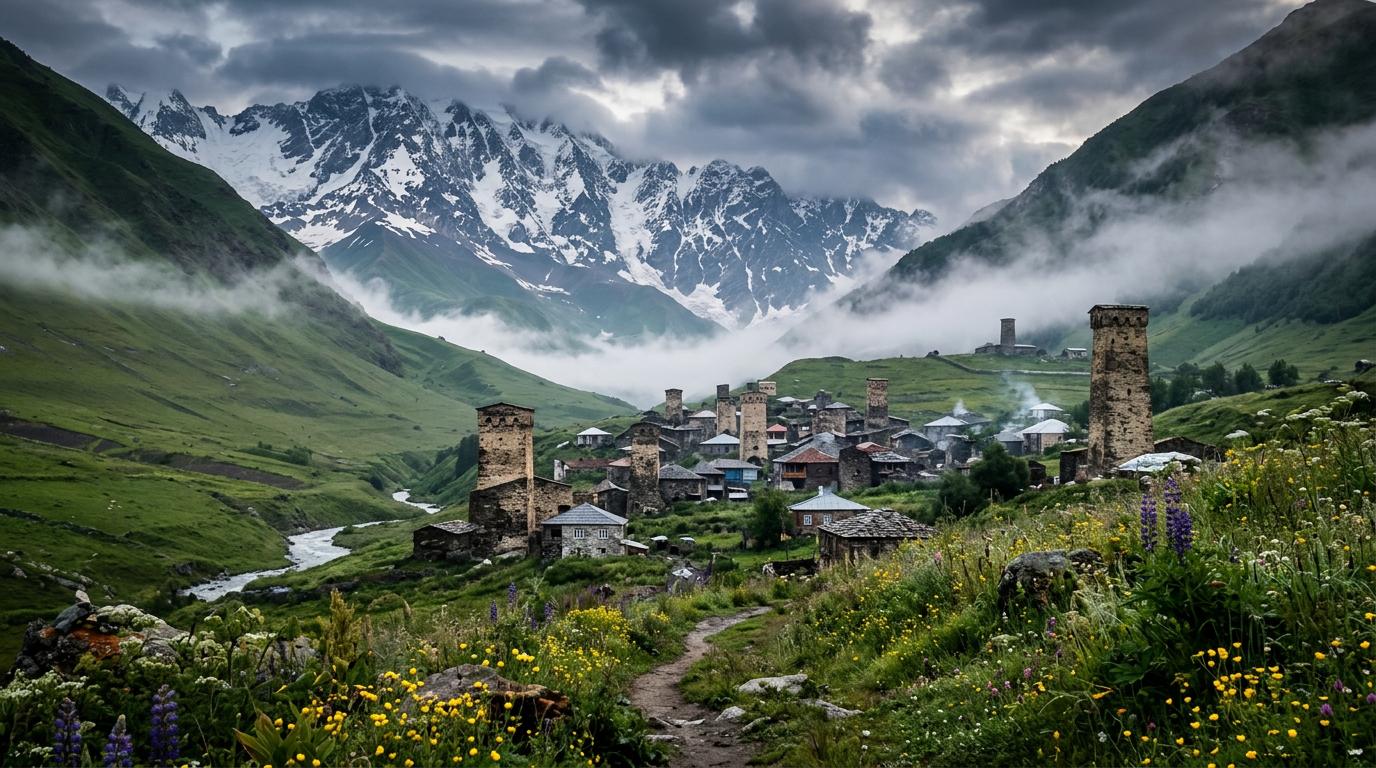
Ushguli is the crown jewel of Svaneti. At 2,100 meters above sea level, it is the highest continuously inhabited settlement in Europe. This remarkable community of four ancient villages contains over forty-seven medieval defensive towers and has changed remarkably little over the centuries. The Lamaria Church, dating from the 12th century, contains remarkable frescoes and offers a glimpse into the region's deeply spiritual past. On clear days, the views of Mount Shkhara, Georgia's highest peak at 5,193 meters, are absolutely breathtaking.
The iconic defensive towers of Svaneti are the region's most distinctive feature. Built between the 9th and 13th centuries, these 20 to 25 meter tall stone structures served as both homes and fortresses. Each family had its own tower, which provided protection during blood feuds and invasions. The towers were built with thick stone walls and narrow windows, with multiple floors connected by wooden ladders that could be pulled up in times of danger. Over 175 towers still stand today in the Mestia and Ushguli regions, creating a skyline unlike anywhere else on Earth.
The classic Mestia to Ushguli trek is Georgia's most famous multi-day hiking route. This four-day journey covers approximately 58 kilometers through some of the most spectacular mountain scenery in the Caucasus. Day one takes you from Mestia to Zhabeshi through forests and meadows. Day two crosses the Zagari Pass at 2,470 meters before descending to the ancient village of Adishi. Day three is the most challenging, crossing the Adishi Glacier stream and climbing the Chkhutnieri Pass at 2,720 meters. Day four offers an easier descent into the iconic towers of Ushguli.
Beyond trekking, Svaneti offers rich cultural experiences. The Svan language, one of four Kartvelian languages, is spoken by fewer than 15,000 people and is classified by UNESCO as definitely endangered. Traditional polyphonic singing, recognized by UNESCO as a masterpiece of intangible heritage, fills the air during festivals and celebrations. Local cuisine features distinctive specialties including Tashmijabi, a cheesy potato dish, and Kubdari, a meat-filled bread. The region's remote location has preserved these traditions in a way that few other places on Earth can match.