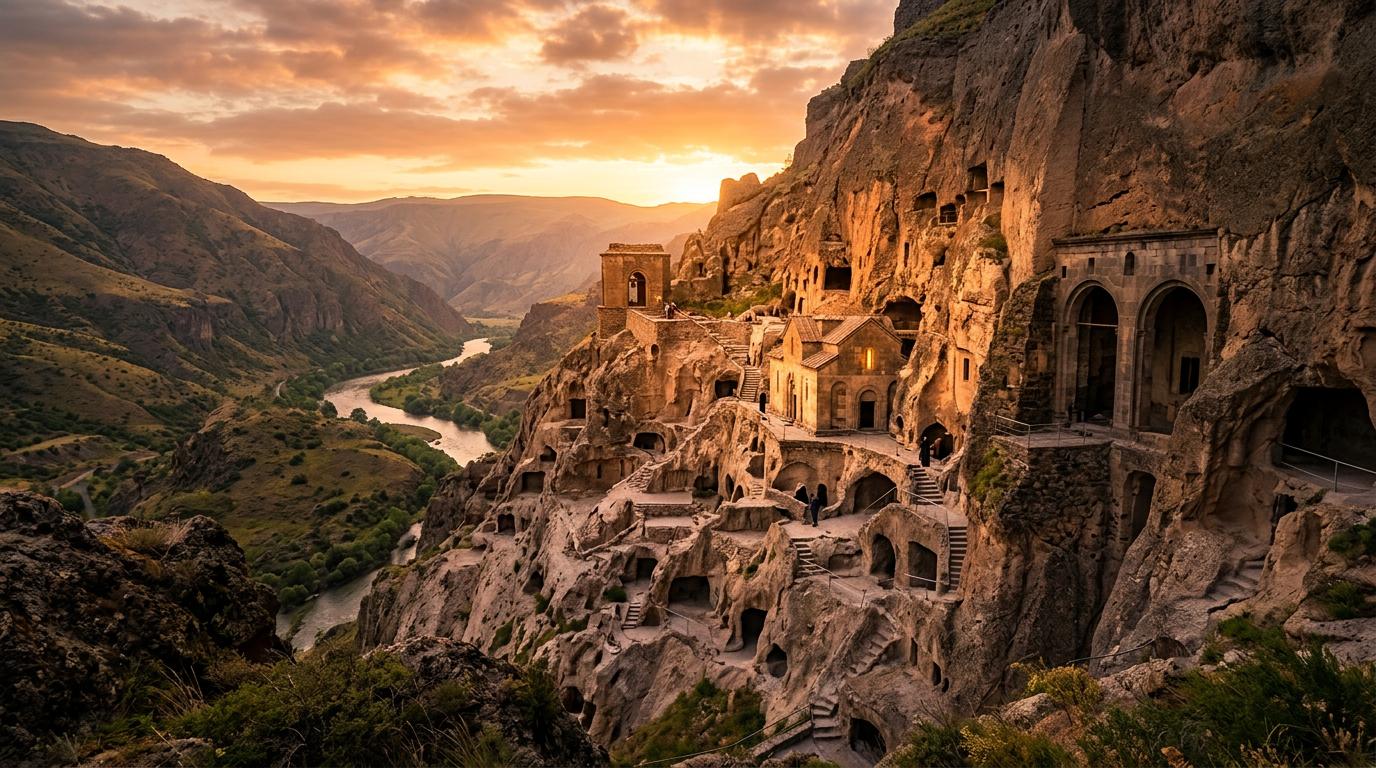
Step into the underground world of Vardzia, Georgia's extraordinary 12th-century cave city carved into the cliffs of the Erusheti Mountains.
Table of Contents
- 1Vardzia is one of the most extraordinary and awe-inspiring s...
- 2The history of Vardzia began in the reign of King George III...
- 3The heart of Vardzia is the Church of the Dormition, a stunn...
- 4In 1283, a massive earthquake destroyed approximately two-th...
- 5Visiting Vardzia requires some planning. The site is located...
- 6The best time to visit Vardzia is from late spring through e...
Vardzia is one of the most extraordinary and awe-inspiring sites in Georgia, a vast cave city carved into the steep cliffs of the Erusheti Mountains in the Samtskhe-Javakheti region. With over six thousand caves spread across nineteen tiers, Vardzia represents one of the most ambitious examples of rock-cut architecture anywhere in the world. This remarkable complex was built during the golden age of the Georgian monarchy under Queen Tamar in the late 12th century, and it remains one of the most significant historical and religious sites in the Caucasus.
The history of Vardzia began in the reign of King George III, who started the initial excavation work in the 1170s. However, it was his daughter, the legendary Queen Tamar, who expanded the complex into the magnificent city it became. At its peak, Vardzia housed around two thousand monks and included churches, chapels, meeting halls, refectories, wine cellars, bakeries, storerooms, stables, and even an irrigation system that brought fresh water from a spring hidden deep within the mountain. The city was designed to be self-sufficient and capable of withstanding long sieges.
The heart of Vardzia is the Church of the Dormition, a stunning rock-hewn church on the upper levels of the complex. Commissioned by Queen Tamar herself, the church contains remarkable frescoes dating from the late 12th century that are considered masterpieces of medieval Georgian art. The frescoes depict Queen Tamar alongside her father King George III, making it one of the earliest known portraits of a Georgian monarch. The church's interior, with its carved columns and arches, demonstrates the extraordinary skill of medieval Georgian craftsmen.
In 1283, a massive earthquake destroyed approximately two-thirds of Vardzia, collapsing many of the caves and exposing the interior to the elements. Despite this devastation, the remaining caves continued to be inhabited by monks for centuries. The site was eventually abandoned in the 16th century after Persian invasions, only to be rediscovered and partially restored in the modern era. Today, Vardzia is a functioning monastery once again, with a small community of monks living in some of the restored caves.
Visiting Vardzia requires some planning. The site is located in southern Georgia, about 250 kilometers from Tbilisi and 130 kilometers from Kutaisi. The most convenient way to visit is by car or as part of an organized tour, as public transportation options are limited. Most visitors combine Vardzia with nearby attractions including the magnificent Rabati Fortress in Akhaltsikhe, the 10th-century Sapara Monastery, and the medieval Khertvisi Fortress. The drive from Tbilisi takes approximately four hours and passes through beautiful mountain scenery, making the journey part of the experience.
The best time to visit Vardzia is from late spring through early autumn, when the weather is pleasant and the surrounding landscape is at its most beautiful. Wear comfortable shoes with good grip, as the cave passages can be slippery and involve steep staircases. Bring a flashlight to explore the darker corners of the caves, and allow at least two to three hours to properly explore the complex. Photography is permitted in most areas, but flash photography is prohibited in the Church of the Dormition to protect the ancient frescoes. The combination of historical significance, architectural wonder, and stunning natural setting makes Vardzia an unforgettable destination.